Carried Forward Against Your Will: The Objects You Never Chose but Cannot Leave Behind
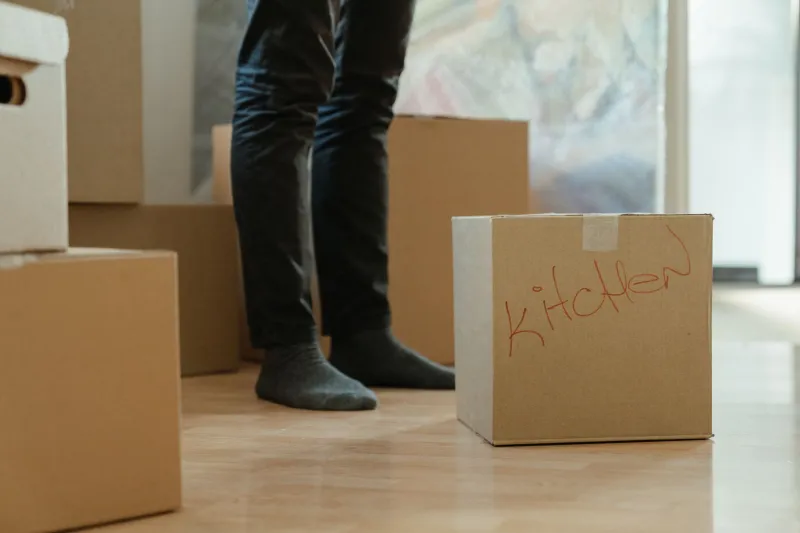
There is a dresser in the corner of a spare bedroom in a third-floor walkup in Chicago that has been moved six times in eleven years. It is heavy, dark-stained oak, deeply unfashionable, and faintly smells of cedar and a grandmother's perfume that no one living can quite name anymore. Its owner—a thirty-one-year-old graphic designer who prefers clean lines and bare surfaces—has never once looked at it with affection. She has looked at it with recognition, which is an entirely different thing.
She keeps moving it anyway.
The Inheritance Nobody Asked For
American households are full of objects that arrived not through choice but through circumstance. A parent downsizes and the dining table needs somewhere to go. A great-aunt passes and the family assumes, without asking, that you have room. A college roommate leaves a bookshelf behind because the moving truck is already full. These items enter our lives sideways, through the back door of obligation, and once inside, they are extraordinarily difficult to remove.
Psychologists who study material culture have long noted that our relationship to objects is rarely straightforward. We do not simply own things; we become entangled with them. But there is a particular and underexamined category of entanglement that applies specifically to inherited or gifted possessions—items whose emotional weight derives not from personal memory or genuine attachment, but from what they represent to someone else. We keep them because discarding them feels like a referendum on a relationship. We keep them because we are afraid of what it would mean to let go.
This is not sentimentality. It is something closer to hostage-holding, and the hostage is ourselves.
Weight as Identity
Consider what it means to carry something heavy across every threshold of your adult life. Each move is, in some sense, a renegotiation of identity—a chance to decide, physically and symbolically, what version of yourself will inhabit the next space. The objects we choose to bring say something about who we believe we are, or who we are becoming. The objects we bring out of obligation say something else entirely: that we have not yet fully separated the self we are building from the selves that were handed to us.
The hand-me-down desk that belonged to a father who wanted you to become a lawyer. The rocking chair from a grandmother who believed that a proper home required certain furnishings. The framed print from a well-meaning ex-partner who thought it suited you. None of these objects were chosen. All of them carry a kind of narrative gravity, pulling you back toward someone else's vision of who you should be and where you should belong.
In a country where mobility is both celebrated and economically coerced—where the average American moves more than eleven times in a lifetime—the things we drag with us take on outsized significance. They are the physical record of every compromise we have made between autonomy and obligation. They are proof that even in a culture that prizes reinvention, the past has mass.
The Guilt Economy of Gifted Objects
There is a particular American social contract embedded in the act of giving someone furniture or a meaningful object. The gift is rarely neutral. It carries an implicit expectation of display, of use, of gratitude performed through continued possession. To give something away, sell it, or—worse—throw it out is to reject not just the object but the relationship it was meant to cement.
This dynamic is especially pronounced in immigrant families and working-class households, where objects often carry the additional weight of scarcity. A dresser that survived three decades and four apartments is not just furniture; it is evidence of endurance, of resourcefulness, of a specific kind of pride that does not come cheaply. To discard it is to say, however unintentionally, that the values it represents no longer apply to you. That you have moved on. That you have moved up. That you are, in some way, no longer the person this object was meant to accompany.
The guilt economy of gifted objects is, at its root, a guilt economy of identity. We hold onto things because we are not yet sure what it would cost us to admit that we have changed.
The Permission We Withhold From Ourselves
What is it, exactly, that finally allows someone to let go?
For some, it is a move too small to accommodate the object—a studio apartment that simply cannot hold a six-drawer dresser. For others, it is a relationship that has ended, severing the emotional obligation the object represented. For still others, it is a slow accumulation of exhaustion: the tenth time you wrap something in moving blankets and carry it down a flight of stairs for a place you are not sure you will stay in either.
But perhaps the most honest answer is this: we let go when we finally accept that our own comfort inside our own space is a legitimate priority. That living surrounded by objects we do not love is a form of quiet self-denial. That the person who gave us the thing—wherever they are now, whatever the relationship has become—does not actually live inside our apartment, and that their expectations, real or imagined, do not have to furnish our lives.
This is harder than it sounds in a culture that conflates loyalty with stasis. To release an inherited object is to practice a kind of ongoing self-authorship that our social scripts rarely celebrate. We have language for honoring the past. We have very little language for the grace of letting it go.
An Empty Corner as a Beginning
The graphic designer in Chicago has not yet given away the dresser. But she has, for the first time, begun to think concretely about what she would put in its place—a low credenza she saw at a shop on Milwaukee Avenue, something that actually fits the room, something she chose. The fantasy of that exchange has surprised her with its emotional charge. She had not realized how much of the room she had never quite claimed.
That is, perhaps, the most revealing thing about the objects we carry against our will. Their absence, when we finally imagine it, does not feel like loss. It feels like space. It feels like the beginning of a room—and a life—that finally, fully belongs to us.
We cannot always choose the places we come from. We cannot always choose what we are handed. But at some point, in some apartment, in some city we are still deciding whether to stay in, we are allowed to choose what stays. We are allowed to carry only what we actually want to carry forward.
Everything else can go.