Ghosts in the Grid: The Online Accounts You Left Behind When You Left Town
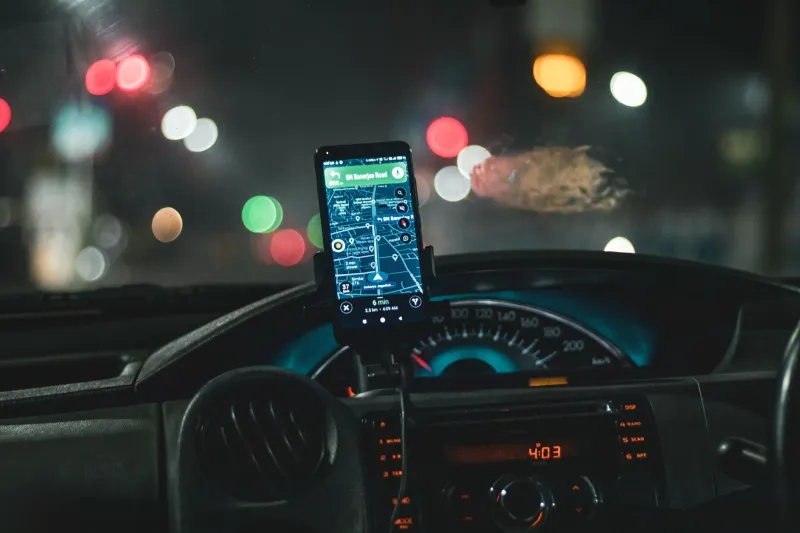
There is a version of you still living in Chicago.
She checked into a Logan Square coffee shop on Foursquare in 2019 and never checked out. Her Yelp profile still lists her hometown as the Near North Side. Her LinkedIn says she commutes to a River North office she vacated three years ago. Her Spotify Wrapped, if anyone thought to look, would still carry the emotional fingerprints of a winter she spent trying to convince herself that city was the right one.
You have since moved to Austin, or Denver, or back to the town you swore you'd escape. But that other you—the one made of cached data and dormant logins—remains exactly where you left her, suspended in digital amber, tagged to coordinates that no longer correspond to your life.
This is the quiet uncanniness of the digital estate: the scattered, unmanaged archive of online selves we leave in every city we depart.
The Address You Forgot to Update
When Americans move—and we move more than almost any other population in the developed world—we follow a familiar checklist. Forward the mail. Update the driver's license. Notify the bank. Transfer utilities. These are the bureaucratic rituals of physical relocation, the administrative proof that you are, officially, somewhere new.
But there is no checklist for the digital self. No government form prompts you to update the city listed on your Reddit profile. No moving company reminds you to audit the geotags embedded in five years of Instagram posts. No one asks whether the email address you created when you first arrived in a city—the one with the neighborhood name in it, the one you gave to your landlord and your dentist and the dog walker you found on Rover—still makes sense now that you've gone.
And so those accounts persist. Quietly. Indefinitely. A constellation of old addresses and abandoned usernames forming a kind of shadow biography, one that tells the story of everywhere you've been without acknowledging where you actually are.
What the Algorithm Remembers
Platforms are not neutral archivists. They are, by design, interested in your location—not as a fact to be updated, but as a data point to be monetized. When you stop correcting them, they stop asking. Google Maps may eventually learn your new neighborhood from your movement patterns, but Facebook's suggested memories will still surface photos from your old apartment on its anniversary. The algorithm does not grieve your departure. It simply keeps serving you the city you left, because that is what it has.
This creates a peculiar form of digital haunting. You open an app and are confronted with a notification about an event happening three blocks from your old place—a place where someone else now sleeps, where your name has been painted over on the mailbox. The platform does not know you are gone. It is still trying to be useful to a version of you that no longer exists.
For some, this is merely inconvenient. For others, it is something closer to grief. To be recommended a restaurant in a neighborhood you loved and lost is to be reminded, quietly and without ceremony, that your belonging there was always contingent. That the city moved on without you. That the algorithm's memory is longer, and less merciful, than your own.
The Identity Left in Escrow
There is a particular kind of person—and if you are reading this, you may recognize yourself in her—who has built a distinct online identity in each city she has inhabited. The Twitter account she created when she moved to New York, full of references to subway delays and corner bodegas, now reads like dispatches from a foreign correspondent. The Facebook profile she maintained during her Seattle years, populated with hiking photos and craft brewery check-ins, belongs to someone she can barely remember being.
These are not simply old posts. They are identity documents. Each one is a record of who you were performing yourself to be in a particular place at a particular time. And because the internet does not delete things easily, they remain—not as memories you've chosen to keep, but as evidence you never thought to destroy.
Psychologists who study identity formation speak of the self as a narrative, a story we tell about continuity across time. But the digital estate complicates that narrative. It does not offer continuity so much as accumulation: version after version of you, each one tagged to a different ZIP code, none of them quite reconcilable with the person you are trying to become in the place you currently occupy.
The Accounts Nobody Closes
There are email addresses that still receive newsletters for yoga studios in cities you haven't visited in years. There are loyalty program accounts accruing points at coffee shops you will never return to. There are neighborhood Facebook groups you joined in a moment of optimistic arrival and never thought to leave, so that you still receive, occasionally, posts about a community you are no longer part of—lost cats you cannot help find, local elections you cannot vote in, block parties you will not attend.
No one is managing these accounts. No one is deciding, thoughtfully, what to keep and what to let go. They simply accumulate, the way objects accumulate in storage units: not because they are wanted, but because the effort of sorting through them feels, in any given moment, like too much.
This is the digital estate in its most literal sense: the sum total of what you leave behind when you move, the online inheritance of your former self. Unlike a physical estate, there is no executor. No lawyer sends a letter. No family member is tasked with going through it. It simply sits, generating occasional notifications, waiting for an attention that will never come.
Learning to Live in Fragments
Perhaps the more honest question is not how to manage these scattered digital selves, but what their persistence reveals about the nature of belonging in contemporary American life.
We are a mobile culture—one that celebrates reinvention, that treats relocation as aspiration, that has built an entire economy around the premise that you can always start over somewhere new. But the internet, with its long memory and its indifference to our departures, keeps a different kind of ledger. It records not the fresh start but the accumulation. Not the new chapter but the entire manuscript, every draft included.
To live with a digital estate is to live with evidence that you have never fully arrived anywhere—that each city has held only a portion of you, and that the portions left behind did not disappear when you did. They became data. They became geotags. They became the city listed on a profile that no longer reflects where you sleep.
There is something clarifying about that, even if it is not entirely comfortable. The digital self, scattered across servers in cities you've abandoned, is not a failure of organization. It is a portrait of how most Americans actually live now: in transit, in fragments, nowhere entirely and everywhere a little.
The ghost in the grid is not a glitch. She is the record of every place that almost held you.