Witnesses to a Life That Didn't Happen: The Furniture You Bought Before You Knew Better
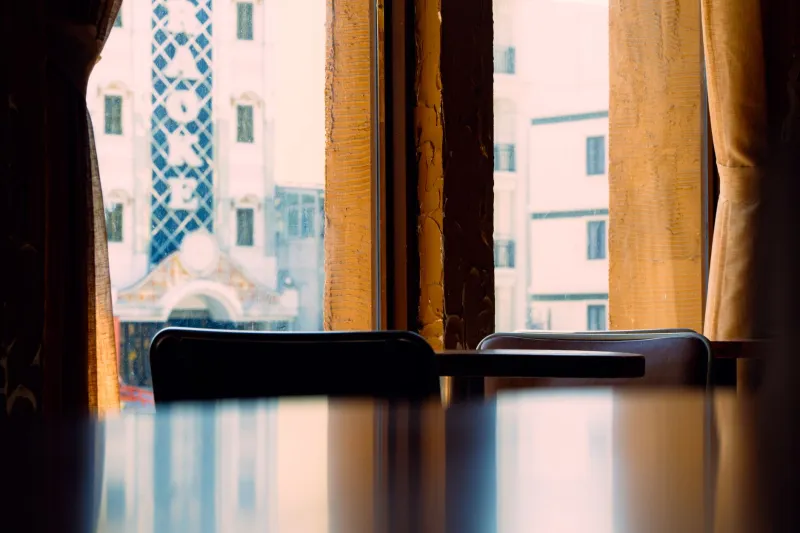
Somewhere in a third-floor walkup in Philadelphia, a woman named Renata keeps a dining table she has never once used for dinner. It seats six. She bought it during what she now calls her "optimism period" — the eighteen months after graduate school when she was newly employed, newly in love, and newly convinced that stability was simply a matter of choosing it. The relationship ended. The job relocated. The table remained.
"It doesn't fit the apartment," she says. "It barely fits the room. But I can't get rid of it because getting rid of it feels like admitting something I'm not ready to admit."
What Renata is describing is not hoarding, nor is it mere sentimentality. It is something more architecturally complex: the experience of inhabiting a space furnished for a self that failed to arrive.
The Purchase as Prophecy
There is a specific cultural script that governs how Americans relate to interior design. We are taught, by the catalogs and the renovation television and the aspirational Pinterest boards, that decorating a home is an act of self-declaration. To choose a sofa is to choose a life. To invest in a quality piece — the kind described as "heirloom," the kind that arrives in a crate rather than a flat-pack box — is to announce one's intention to remain, to accumulate, to become the kind of person who stays.
For a generation navigating contract employment, unaffordable housing markets, and the slow erosion of the social structures that once anchored adult life, that script has become a form of fiction. And yet we keep buying the furniture. We keep furnishing the future.
The purchases often arrive at moments of genuine hope. A first apartment that feels, briefly, like it could become a permanent address. A salary bump that suggests the precarity might finally be lifting. A relationship that seems, for a season, like it might be the one that makes the settling-down narrative coherent. In those moments, a well-made bookcase or a carefully chosen armchair is not an indulgence — it is an investment in belief.
The trouble comes later, when the belief dissolves but the furniture does not.
Artifacts of Abandoned Plans
Psychologists who study material culture have long noted that objects carry what anthropologist Janet Hoskins calls "biographical meaning" — the accumulated weight of the events and intentions they have witnessed or embodied. A wedding ring is the obvious example. Less discussed is the Pottery Barn sectional purchased the month before a relationship imploded, now occupying a living room in a city you moved to alone.
For many Americans in their late twenties and thirties, the home has become a kind of museum of abandoned selves. The standing desk purchased during the freelance era. The bar cart assembled during the phase when hosting felt possible. The king-sized bed frame — the one that required two people to carry up the stairs — now supporting a single sleeper in a room with too much empty floor.
These objects do not merely sit. They speak. They ask, with the quiet persistence of inanimate things, about the distance between the life that was imagined and the one that is being lived.
"I bought a set of matching linen napkins," says Marcus, a thirty-four-year-old graphic designer in Austin, Texas. "Real ones, not paper. I had this whole vision of Sunday dinners, people coming over, a kind of life I'd seen in movies and sort of believed I was heading toward. Now they're in a drawer and I eat takeout on my couch and every time I open that drawer I feel like I'm looking at evidence of my own naivety."
The napkins are not the problem, of course. The napkins are a proxy for something harder to name: the grief of having wanted something ordinary and finding it, nonetheless, out of reach.
The Aesthetics of Suspended Time
There is a particular interior design phenomenon worth naming here. Walk through enough apartments in American cities and you will find them: spaces that appear, at first glance, beautifully curated, but reveal, upon closer inspection, a kind of temporal dislocation. The room is furnished for a life that has not yet begun, or for one that has already ended, or — most unsettlingly — for both simultaneously.
The effect is not unlike the famous image of Miss Havisham's rotting wedding cake, though far less dramatic and far more common. It is the experience of living in a space that was designed for a different story, and being unable or unwilling to redecorate because doing so would require acknowledging that the story has changed.
Some people respond by overcrowding the space with new purchases — layering new aspirations over old ones until the apartment becomes a kind of geological record of successive hopes. Others respond by stripping everything down, selling or donating the offending pieces in a purge that feels, briefly, like freedom. Neither strategy quite resolves the underlying question: who are you now, and what does a home for that person actually look like?
What It Costs to Keep the Evidence
There is, it should be said, something worth preserving in the refusal to simply discard the furniture of abandoned futures. The dining table Renata cannot bring herself to sell is not only a record of disappointment. It is also a record of the fact that she once believed — fully, generously, without irony — in a version of her life worth furnishing.
In a culture that prizes forward motion, that celebrates the pivot and the rebrand and the strategic reinvention, there is something quietly radical about sitting with the evidence of what you hoped for. The chair you bought for the study of the apartment you were certain you'd eventually afford is not only a reminder of what didn't happen. It is proof that you were, at some point, capable of imagining a future worth investing in.
The question is not whether to keep such objects or release them. The question is what relationship to cultivate with the gap they represent — the distance between the life that was decorated in advance and the one that is actually being lived.
That distance is not a failure. It is, for many Americans navigating an economy that has made stability a luxury and permanence a kind of fantasy, simply the texture of contemporary life. The furniture is not a monument to naivety. It is, in its way, a monument to hope — stubborn, expensive, occasionally inconvenient hope.
Renata has started using the dining table as a desk. It is too large for the room and still seats no one but her. She has placed a lamp at one end and her laptop at the other, and she works there in the evenings, surrounded by more space than she needs.
"It's actually a very good surface," she says. "Solid. It doesn't wobble."
Sometimes that is what becomes of the furniture you bought for a dream. Not a ruin. Not a monument. Just a surface — repurposed, still solid, still here.