Witnessed and Found Wanting: The Unbearable Intimacy of Showing a Home You Made Your Own
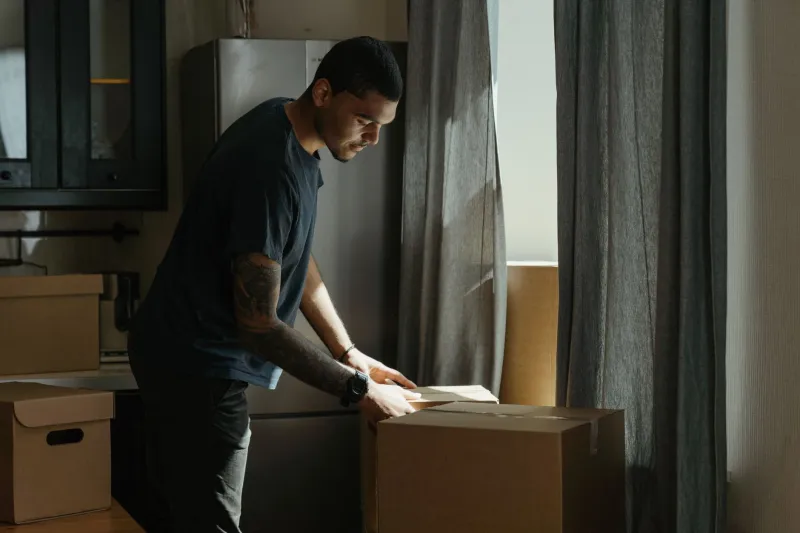
There is a specific kind of dread that descends on a Sunday afternoon when you realize the photographer is coming Tuesday. Not stage fright, exactly. Not embarrassment. Something closer to exposure—the sensation of being seen in a way you did not consent to, in a language you did not choose.
You have spent eighteen months, perhaps three years, arranging this place. The gallery wall in the hallway was not decorative impulse but deliberate autobiography. The mismatched chairs around the kitchen table were sourced from estate sales in three different states, each one a small act of defiance against the flat-pack uniformity that rental living so often demands. The curtains—the ones you hemmed yourself because the windows were a nonstandard width that no store-bought panel could accommodate—hang at precisely the angle that catches the afternoon light without letting in the heat. You know this apartment the way you know your own handwriting.
And now it must be made presentable for strangers.
The Performance of Neutrality
What the move-out inspection asks of a tenant is not simply cleanliness. It asks for erasure. The landlord's checklist—scuffs on baseboards, nail holes in drywall, the faint discoloration above the stove—is a document of your presence rendered as damage. The language of property management has no category for inhabited with care or loved into livability. There is only the condition at move-in versus the condition at move-out, and the financial distance between them.
This is the cruelty that rarely gets named: you are being asked to perform neutrality about a space that has been anything but neutral to you. The apartment did not stay the same while you lived in it, and neither did you. The two of you changed together, in the slow, unremarkable way that people and places do when they are given enough time and attention. To prepare it for inspection is to undo that mutual transformation, to sand it back toward blankness so that someone else's story can begin where yours is ending.
For renters—and in 2024, that means roughly one-third of all American households, a figure that climbs considerably higher in cities like New York, Los Angeles, and Chicago—this ritual of erasure is not occasional. It is recurring. It is the punctuation mark at the end of every chapter, the forced reset that the ownership economy demands before it will allow you to begin again somewhere else.
What the Listing Photographer Cannot Capture
The listing photographer arrives with a wide-angle lens specifically calibrated to make rooms appear larger than they are. This is not deception so much as convention; everyone understands the grammar of the rental listing, the way the photographs promise a version of the space that exists only at a particular focal length, in particular light, before anyone has lived there.
What the wide-angle lens cannot capture is the institutional knowledge embedded in the apartment itself. It cannot photograph the way you learned to jiggle the bathroom faucet handle slightly to the left to stop the dripping, or the precise location on the third step of the interior staircase where the creak is unavoidable and you learned to step to the right to avoid waking your partner. It cannot photograph the window you kept permanently cracked because the radiator ran hot in January, or the corner of the living room where the cell signal was inexplicably stronger and you migrated there for every important phone call.
This knowledge—accumulated through daily navigation of a specific, imperfect space—is a form of intimacy. It is not transferable, and it is not photographable. It disappears the moment you hand back the keys, leaving no record of its existence except in the body that learned it.
The Strangers Who Come to Look
Perhaps the most disorienting moment in the move-out process is the showing: the afternoon when prospective tenants walk through your still-inhabited apartment, accompanied by a leasing agent who speaks about the space in the third person and the future tense. The kitchen gets great light in the mornings. The previous tenant kept it very well.
You are, in these moments, simultaneously present and already gone. The visitors move through rooms you still sleep and eat and argue in, assessing them for their own future use, projecting their own lives onto surfaces you have not yet vacated. You watch them open closet doors you know by touch in the dark. You listen to them discuss the square footage of a bathroom you have stood in every morning for years.
There is no cultural script for this. American narratives about homemaking—even rented homemaking—tend to emphasize the arrival, the nesting, the gradual accumulation of comfort and character. They do not dwell on the forced unwinding of all that accumulation, the particular vulnerability of standing in your own kitchen while a stranger decides whether it is good enough for them.
The Anxiety That Has No Name in Property Law
The emotional texture of this experience has been largely invisible to the legal and economic frameworks that govern American rental housing. Security deposit disputes are adjudicated on the basis of physical damage, not psychological cost. Lease agreements specify the tenant's obligations to restore the property to its original condition but contain no language acknowledging what it costs to do so—not financially, but in the more diffuse currency of selfhood.
This silence is not accidental. The rental economy functions, in part, by treating dwelling as a transaction rather than a transformation. If landlords and property managers were required to reckon with the full human weight of what tenants bring to a space—the time, the creativity, the quiet daily labor of making somewhere livable—the calculus of security deposits and move-out inspections would become considerably more complicated.
Instead, that weight is absorbed privately, by the tenant, in the weeks before departure. It manifests as the Sunday dread before the photographer comes. It manifests as the strange grief of spackling nail holes in a wall you hung pictures on because you were trying, in the only way available to you, to make a rented room feel like a life.
What It Means to Have Made It Yours
There is a question embedded in all of this that the rental market does not ask but that renters carry with them from address to address: what does it mean to belong to a place you are not permitted to own?
The answer, for millions of Americans, is that belonging happens anyway—quietly, incrementally, without legal recognition. It happens in the choosing of curtain fabric and the memorizing of faucet quirks and the slow education of the body into the rhythms of a specific set of rooms. It happens despite the impermanence, or perhaps because of it. When you know the lease has an end date, you may actually pay closer attention to the place you are in, the way you pay closer attention to anything you know you will eventually lose.
The apartment tour you will never give—the one that explains the gallery wall and the mismatched chairs and the hemmed curtains and the third step's creak—is the tour of a self that was built here, in these rooms, during this particular stretch of time. No listing photographer will capture it. No inspection checklist will account for it.
But it existed. And its disappearance, unremarked and uncompensated, is one of the quiet losses that defines what it means to make a home in America today.